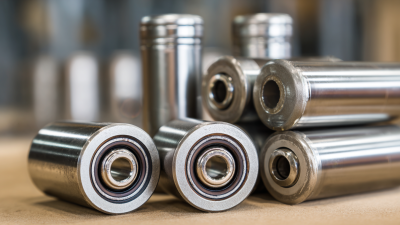
When you're diving into precision engineering, picking the right components can make all the difference. Needle bearings, in my opinion, are pretty awesome for your next project. Their clever design lets them handle heavy loads without taking up too much space — pretty neat, right? That's why you'll find them in a bunch of different setups, from cars to industrial machines.
There are quite a few perks to using needle bearings. They help cut down on friction, which means your equipment runs smoother and lasts longer. Plus, they can handle high speeds with no fuss. But — and here’s the catch — if you don't install or maintain them properly, you might not see all those benefits. That’s where having some industry know-how really counts.
Take companies like Koyo Bearings, for example. They’ve built a solid reputation because of their quality and reliability. Years of experience and a passion for innovation make them a name you can trust. Still, it’s super important to work with suppliers who get your specific needs and can offer solutions tailored to you. Choosing the right needle bearing isn’t just a small detail; it can really make or break your project’s success. So yeah, where you get them from definitely matters.
Needle bearings are a fascinating component in the world of machinery. Their design involves long, thin rollers arranged like needles. This structure allows them to support heavy loads while taking up minimal space. The primary function of a needle bearing is to reduce friction between moving parts, leading to higher efficiency in various applications. Many engineers appreciate their lightweight nature and their ability to handle high speeds.
When selecting needle bearings, it is essential to consider specific factors. Load capacity, speed ratings, and environmental conditions are crucial. While these bearings excel in numerous scenarios, they may not be suitable for every project. For instance, in applications requiring extreme durability, other bearing types might outperform them. It's vital to evaluate the intended use thoroughly.
Despite their advantages, needle bearings have limitations. They can be sensitive to misalignment and require precise installation. Even minor imperfections can lead to performance issues. Understanding these pitfalls is just as important as recognizing their benefits. Engineers must think critically about whether needle bearings fit their project's needs.
Needle bearings are often overlooked in the design of mechanical systems. However, their unique advantages make them a compelling choice for many projects. Unlike traditional bearings, needle bearings feature elongated rollers. This design allows for a larger load-carrying capacity in a compact space. Industry data shows that needle bearings can handle radial loads up to 20% higher than comparable bearing types. This is crucial in applications where space is limited.
One significant benefit is their low friction. Needle bearings often exhibit lower friction coefficients than standard ball bearings. This feature translates to improved efficiency, resulting in reduced energy consumption. According to a report from the Bearing Manufacturers Association, using needle bearings can enhance the lifespan of machinery by 30%. This means less frequent replacements, which can lead to cost savings.
Consider the assembly process. Needle bearings can simplify assembly due to their smaller outer diameter. This can reduce the time required for installation. However, proper alignment is critical. If misalignment occurs, the performance could degrade rapidly. Therefore, thorough design and testing are essential to maximize needle bearings' substantial advantages. While needle bearings offer great benefits, they require careful consideration to avoid potential pitfalls.
| Advantage | Needle Bearings | Other Bearing Types |
|---|---|---|
| Space Efficiency | Compact size, ideal for tight spaces | Typically bulkier, requiring more room |
| Load Capacity | High load-carrying capacity to weight ratio | Varies widely, often less efficient |
| Friction Reduction | Lower friction due to line contact | Higher friction due to surface contact |
| Versatility | Suitable for many applications, including automotive and industrial | Best suited for specific applications, less flexible |
| Weight | Lighter than many other bearing types | Heavier, contributing to overall equipment weight |
| Cost-effectiveness | Generally lower cost due to material efficiency | Can be more expensive, depending on the type |
Needle bearings are integral in various industries due to their unique design and functionality. They consist of long, thin rollers that reduce friction and increase load capacity. These characteristics make them prime candidates for applications where space is limited.
In the automotive sector, needle bearings are commonly used in engines and transmissions. They help optimize performance while minimizing weight and friction. In the aerospace industry, these bearings support critical components, providing durability and reliability. Machinery in manufacturing also benefits from needle bearings, enhancing precision and efficiency.
However, it’s essential to consider potential drawbacks. Needle bearings can be sensitive to misalignment and may require precise installation. Regular maintenance is crucial to avoid premature wear. Industries must ensure proper training for technicians handling these components. While needle bearings offer significant advantages, understanding their limitations is vital for successful application in various projects.
When selecting needle bearings for a project, several critical factors deserve attention. These bearings are compact and designed for high load capacities. Their unique design allows them to fit into tight spaces, which is essential for applications in various industries. A study from the Journal of Manufacturing Science and Engineering noted that needle bearings could enhance performance by reducing friction in machinery by up to 30%.
The selection process should also consider operating conditions. Temperature and load variations can dramatically affect bearing life. According to research from the American Society of Mechanical Engineers, improper selection in these areas can lead to premature failure. Additionally, one must evaluate the lubrication method. A well-lubricated needle bearing can last significantly longer than one without, often increasing life expectancy by around 50%.
Finally, understanding the material composition and surface treatment is key. Needle bearings are available in various materials, including steel and ceramics, each with unique properties. A report from the International Journal of Fatigue cited that bearings made from advanced composites can withstand higher stress levels, but they may not always be the best choice for every application. Ensuring the right match is crucial for optimal performance.
Needle bearings are known for their compact design and high load capacity. However, proper maintenance is critical for longevity and performance. Regular inspections can identify wear and tear before they lead to significant issues. Lack of lubrication is a common problem. This can cause increased friction, leading to overheating and eventual failure. According to a recent industry report, over 30% of needle bearing failures are linked to improper maintenance.
Tips for maintaining needle bearings: ensure they are lubricated regularly with the right type of grease. Keep an eye on temperature changes as they can indicate excessive friction. Dust and debris can also compromise performance. Consider using sealing mechanisms to protect against contaminants. Regular cleaning and shielding will enhance durability and efficiency.
Vibration analysis can provide insights into the condition of needle bearings. This method uses specialized equipment to detect anomalies. Addressing identified issues helps avoid unexpected failures. It is vital to document maintenance routines and performance metrics. Through proactive management, the lifespan of needle bearings can be extended significantly. Keeping a log of service intervals and conditions can improve reliability and efficiency in the long run.
Needle bearings offer several advantages over traditional bearings, including reduced friction, greater load capacity, and compact design. The chart below compares the maintenance requirements and lifespan of needle bearings versus traditional bearings based on typical usage scenarios.
Needle bearings are often misunderstood. Many believe they are only useful in light-duty applications. This myth overlooks their ability to handle high loads in compact spaces. Their design allows them to carry a significant load while maintaining a small footprint. This makes them ideal for tight-fitting machinery.
Another common misconception is regarding their durability. Some think needle bearings wear out quickly. In reality, when properly installed, they can last a long time. They also provide low friction, which reduces heat generation. Heat is often the enemy of bearing performance. A well-chosen needle bearing can enhance efficiency and lifespan.
People sometimes worry about lubrication. They assume these bearings require frequent maintenance. However, many modern needle bearings are designed for low or no maintenance. This is especially true in sealed types. End-users benefit from reduced downtime and operating costs. These misconceptions can lead to missed opportunities in choosing the right bearing. It's worth exploring more about needle bearings for various applications.
Needle bearings are evolving rapidly. This innovation is primarily driven by performance demands in various industries. Future trends indicate a focus on miniaturization. Smaller designs will not only save space but also improve efficiency. These bearings will find applications in aerospace, automotive, and robotics.
Another trend is the integration of smart technology. Sensors will monitor real-time performance and wear. This data allows for predictive maintenance, reducing downtime. Eco-friendliness is also a priority. Sustainable materials and manufacturing processes are becoming the norm.
Designs will feature enhanced lubrication systems, reducing friction and extending bearing life. However, the challenge lies in balancing performance and cost. Manufacturers need to reflect on long-term benefits versus short-term expenses. As this technology advances, staying informed is crucial for engineers and project managers alike.
Needle roller bearings, with their unique cylindrical roller design, offer significant advantages in automotive applications. Their slender and elongated profile allows these bearings to accommodate high radial loads while maintaining a compact dimensional footprint. This design is particularly beneficial in automotive settings, where space constraints are common and the need for efficient load distribution is critical. The use of needle rollers ensures that the bearing can handle high levels of stress, making it an ideal choice for various components such as gearboxes, transmissions, and engine assemblies.
One of the standout characteristics of needle roller bearings is their remarkable load-carrying capacity relative to their size. Despite being lightweight and compact, they are engineered to support substantial weight and withstand extreme forces. This unique capability makes them essential components in modern automotive engineering, where reliability and performance are paramount. In addition, their low friction and smooth operational properties contribute to enhanced fuel efficiency, which is increasingly important in today's environmentally-conscious automotive market. As a result, the HK Nk Na Fy F Bk Axk K NF Csk Rna Nki Tra Br series of needle roller bearings exemplifies the innovation and quality that drive advancements in automotive technology.
: Needle bearings are long, thin rollers arranged to support heavy loads and reduce friction.
They decrease friction between moving parts, enhancing efficiency in many applications.
Load capacity, speed ratings, and environmental conditions are crucial factors to evaluate.
No, they may not perform well in applications needing extreme durability.
They can be sensitive to misalignment and require precise installation for optimal performance.
They are used in automotive, aerospace, and manufacturing industries, among others.
They minimize weight and friction while increasing load capacity in confined spaces.
Yes, regular maintenance is essential to prevent premature wear and ensure longevity.
Proper training is vital, as improper handling can lead to performance issues.
It’s necessary to recognize their sensitivity to misalignment and evaluate their suitability for specific tasks.
Needle bearings are a specialized type of rolling-element bearing that utilize long, thin cylindrical rollers. They excel in applications requiring high load capacity while conserving space, making them ideal for various industries, including automotive and aerospace. The key advantages of needle bearings include minimal friction, enhanced durability, and the ability to operate under extreme conditions. However, when choosing needle bearings, factors such as load requirements, lubrication, and installation conditions must be carefully considered to ensure optimal performance.
Maintenance and care are crucial for preserving the lifespan of needle bearings. Regular inspection and proper lubrication can prevent issues such as wear and overheating. Despite some common myths surrounding needle bearings—such as their fragility—these components are robust when properly selected and maintained. As technology advances, the future of needle bearing design promises innovations that will further improve efficiency and application versatility, solidifying their role in modern engineering solutions.